












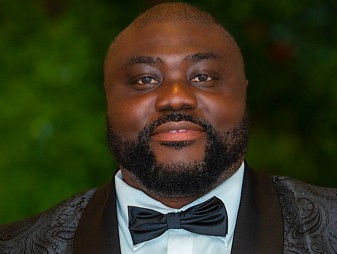
Benedict Anchang, MSc, PhD
NIH / NIEHS / NCI · Research Triangle Park, USA
Dr. Anchang is a Stadtman Tenure-Track Investigator in the Biostatistics and Computational Biology Branch at the National Institute of Environmental Health Sciences (NIEHS), with a joint appointment at the National Cancer Institute (NCI). He leads the Computational and Systems Biology Group, which develops advanced computational and systems biology approaches to analyze high-dimensional and multimodal omics data and model complex biological systems. His research spans cancer biology, immunology, drug interactions, environmental exposures, and reproductive health, with the overarching goal of advancing precision medicine and improving human health.
Keynote abstract
Integrating Population Diversity with Multiscale Molecular and Cellular Biology: A Computational and Systems Approach to Human Health and Disease
Complex human phenotypes emerge from interactions across multiple biological scales, from population diversity and genetic variation to regulatory mechanisms, signaling networks, cell states, intercellular communication, tissue organization, and health outcomes. Understanding these relationships requires computational frameworks that integrate high-dimensional and multimodal data across molecular, cellular, spatial, and population scales. In this keynote, I will present computational and systems biology approaches that integrate genomics, ancestry, epigenomics, transcriptomics, single-cell, spatial, and imaging data, using maternal-fetal health and breast cancer as complementary biological systems.
In pregnancy, we are developing ancestry-aware models that connect genetic and regulatory variation to placental cell states, maternal-placental-fetal communication, environmental exposures, and birth outcomes. I will highlight ongoing collaborations with investigators at Nigerian universities through Chan Zuckerberg Initiative Human Cell Atlas projects focused on building a multi-omic atlas of placental development and characterizing spatiotemporal maternal blood-placental interactions across pregnancy in diverse populations.
In breast cancer, we integrate experimental models with widely used cancer genomics datasets, including TCGA and METABRIC, as well as single-cell and spatially resolved datasets, to investigate relationships among ancestry-associated genetic variation, mitochondrial-nuclear interactions, glucocorticoid receptor (GR) signaling, tumor cell states, and clinical phenotypes. Experimentally derived GR transcriptional signatures connect glucocorticoid responses to patient tumors, while integration with genetic variation, quantitative tumor morphology, and single-cell-informed analyses reveals context-dependent interactions involving the tumor microenvironment.
Together, these studies demonstrate how integrating population diversity, genetic and regulatory variation, signaling, cell states, multicellular communication, and tissue phenotypes can reveal biological relationships that are not apparent when individual layers are analyzed independently. The long-term goal is to develop multiscale, ancestry-aware computational models that connect population diversity with biological mechanisms and disease outcomes, enabling more biologically inclusive and mechanistically informed approaches to human health and disease.
